Posts

more Peer Pressure - Girls and Boys?

  For Junior class: Who faces more Peer Pressure - Girls and Boys? Peer pressure affects both girls and boys, but in different ways. Girls often feel pressure to look a certain way and to fit in socially. They may worry about their appearance and popularity, especially because of social media. Boys usually feel pressure to be tough and competitive. They might think they should hide their feelings or take part in risky activities to impress their friends. While both genders face peer pressure, the challenges they encounter can be quite different. For Senior Class: Who faces more Peer Pressure - Girls and Boys? Peer pressure is a big part of growing up. It influences how young people make choices and see themselves. Both girls and boys feel peer pressure, but they experience it in different ways. It is important to understand these differences to help students deal with them. Girls often face pressure about how they look and their social lives. Many girls feel they must look perfect ...
The Importance of Kindness and Truthfulness in Today's Society

  For Junior Class: Is it better to be kind and truthful? Being kind and truthful are two essential qualities that greatly impact our relationships and communities. Kindness fosters a sense of connection and empathy, allowing individuals to support and uplift one another. When we approach others with kindness, we create an environment where people feel valued and respected. Truthfulness, on the other hand, builds trust and integrity. By being honest, we encourage open communication and create a foundation for strong relationships. When combined, kindness and truthfulness create a powerful force for good, promoting understanding and compassion in our interactions. Ultimately, being both kind and truthful not only enhances our personal lives but also contributes to a more harmonious society. For Senior Class: Is it better to be kind and truthful?   In an increasingly complex world, the values of kindness and truthfulness stand as cornerstones for building strong, sup...

Climate Change

Image
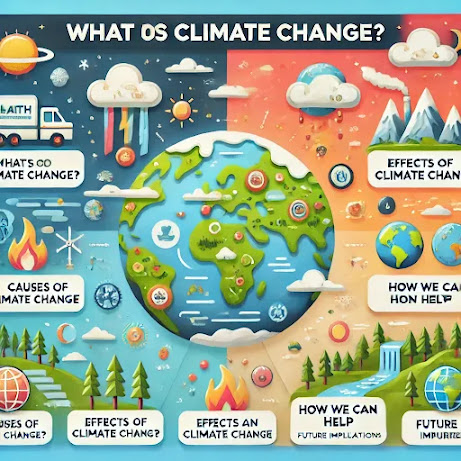
  Understanding Climate Change Climate change is one of the most pressing issues facing our planet today. This article aims to explain what climate change is, its causes, effects, and what we can do to combat it. Understanding climate change is essential for students as it affects not only our environment but also our future. What is Climate Change? Climate change refers to long-term changes in temperature, precipitation, wind patterns, and other elements of the Earth's climate system. While the Earth's climate has always changed over geological timescales, recent changes are largely driven by human activities. These changes are primarily evident in rising temperatures, shifting weather patterns, and increased frequency of extreme weather events. Causes of Climate Change 1. Greenhouse Gas Emissions The primary cause of recent climate change is the increase in greenhouse gases (GHGs) in the atmosphere. GHGs, such as carbon dioxide (CO2), methane (CH4), and nitrous ox...

Does Capital Punishment Deter Crime?

  For Senior Class: Does Capital Punishment Deter Crime? Capital punishment does not effectively deter crime, as numerous studies have shown that there is no consistent correlation between the death penalty and lower crime rates. In fact, many countries and states that have abolished capital punishment continue to see declines in crime, while regions that maintain it do not necessarily experience reduced violence or criminal activity. Factors such as socioeconomic conditions, access to education, and community resources play a much more significant role in influencing crime rates than the existence of the death penalty. Moreover, the irreversible nature of capital punishment raises ethical concerns, particularly in cases of wrongful convictions, highlighting the need for alternative methods of addressing crime and ensuring justice. For Senior Class: Does Capital Punishment Deter Crime? The debate surrounding capital punishment, or the death penalty, has persisted fo...

Does Social Media Do More Harm Than Good?

  For Junior Class: Does Social Media Do More Harm Than Good? Social media does more harm than good, as it often exacerbates mental health issues, spreads misinformation, and fosters unhealthy comparisons among users. While it can connect people and provide a platform for marginalized voices, the negative impacts, such as increased anxiety, depression, and feelings of loneliness, is significant. Additionally, the prevalence of fake news and harmful content can lead to societal divisions and misinformation, further complicating public discourse. As users navigate a landscape filled with curetted lifestyles and unrealistic standards, the potential for social media to cause harm outweighs its benefits, necessitating a critical examination of its role in society. For Senior Class: Does Social Media Do More Harm Than Good? The advent of social media has transformed the way individuals communicate, share information, and interact with one another. Platforms such as Facebook...

Is It Acceptable to Use Animals for Experimentation and Research?

  For Junior Class: Is It Acceptable to Use Animals for Experimentation and Research? The use of animals for experimentation and research is a deeply controversial issue. While some argue that animal testing has been essential for medical advancements and scientific progress, others contend that it is unethical to subject animals to potentially painful or harmful procedures. Animal research can lead to life-saving treatments and help ensure the safety of products, but it raises serious moral questions about the suffering inflicted on animals. The acceptability of using animals in experiments depends on finding a balance between scientific necessity and ethical responsibility, ensuring that alternatives are considered and animal welfare is prioritized. For Senior Class: Is It Acceptable to Use Animals for Experimentation and Research? The debate surrounding the use of animals in scientific research is both complex and emotionally charged. On one side, proponents argu...

Should Physical Education Be Part of the School Curriculum?

  For Junior Class: Should Physical Education Be Part of the School Curriculum? Yes, physical education (PE) should be a part of the school curriculum because it promotes the overall well-being of students. Regular physical activity is essential for maintaining a healthy body, reducing stress, and improving focus, which can enhance academic performance. Physical education teaches students valuable life skills such as teamwork, discipline, and perseverance, which are applicable both in and outside of school. Moreover, with rising rates of childhood obesity and related health issues, PE helps instill lifelong habits of fitness and healthy living, fostering a well-rounded and balanced education for all students. For Senior Class: Should Physical Education Be Part of the School Curriculum? The role of physical education (PE) in schools has been a topic of debate for many years. While some argue that it takes valuable time away from academic subjects, others insist that ...